A Policy Platform for Managing
Urban Traffic Demand.
The platform provides tools enabling governments to manage congestion through incentive programs and configurable pricing policies. Designed for deployment in a phased, auditable public-sector environment.
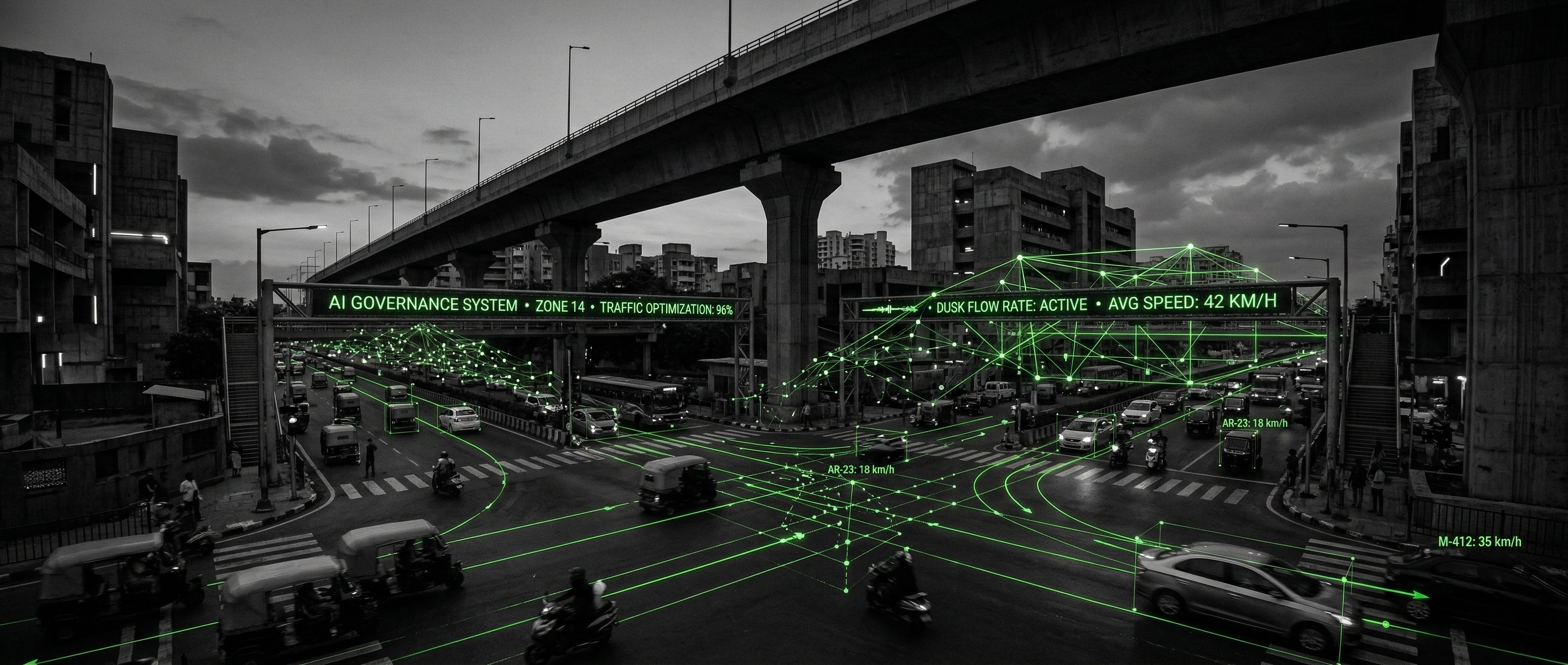
Government Control Framework
Authorities define the policy model; the platform executes it. Explore what is controlled, then jump to the supporting audit, privacy, and enforcement sections.
Control area 01
Congestion pricing rules
Select a control area to read what remains government-defined.
Transparency and Auditability
This auditability posture is intended to support government accountability, procurement review, and the ability to explain programme operation in public-sector terms.
Pricing Calculations
Every charge is generated as a traceable record — timestamped, policy-referenced, and queryable against the rules configured by the city authority.
Enforcement Actions
Enforcement-linked actions produce records stating which rule was applied, the triggering condition, the corridor, and the operational process — all retrievable for review.
Reward Distributions
Each incentive payout is recorded with sufficient detail for programme reconciliation, policy review, and cross-reference against the configured eligibility rules.
Public Accountability
The full audit architecture supports parliamentary review, procurement assessment, and public disclosure — built to meet the accountability standards expected of Indian government programmes.
Privacy Safeguards
The platform is designed around architectural protections intended to reduce surveillance risk and align public-sector mobility policy with data minimization principles.
No biometric data is collected. No continuous location tracking is required. Data collection is limited to what is needed to determine eligibility, distribute rewards, and support aggregated programme oversight.
Enforcement Integration
Existing ANPR Networks
The platform is designed for integration with existing ANPR-based environments where corridor monitoring or road-pricing enforcement logic already exists.
Enforcement Systems
Enforcement systems can be connected to the programme model so that government-defined rules and thresholds are reflected in operational workflows.
Dispute Resolution
The architecture is designed to support dispute resolution pathways so operational actions can be reviewed, challenged, and corrected through a documented process.
Phased Implementation
The deployment model is designed to reduce perceived risk by moving through a phased structure rather than an immediate citywide programme launch.
The phases cover architecture development, system integration, pilot deployment, and city programme expansion. Each step is intended to make the next step more evidence-based and more manageable for the authority.
Establish the policy and technical foundation.
Connect the platform to city and ecosystem interfaces.
Run a bounded programme before scale.
Extend only if evaluation supports continuation.
Request Government
Briefing
If your authority is evaluating demand-management tools, MTSAi can provide current government briefing materials and platform architecture documentation for structured review.